

Medical Intelligent Recognition and Assistance for Complex guidance and Localization Enhancement in robotics & laparoscopic Surgery
Data governance
Digital autonomy
Boost Innovation
Our Objectives
The purpose of the MIRACLE project is to:
- Develop a secure and interoperable data space for digital surgery.
- Enhance surgical precision and reduce intraoperative risks through AI.
- Promote innovation and European leadership in health data technologies.
- Support medical training and clinical decision-making with real-time tools.
What is MIRACLE?
MIRACLE is a research and innovation project led by the University of Valencia that aims to bring artificial intelligence and data-driven technologies into the surgical field. The initiative focuses on creating a secure, interoperable data space for robotic and laparoscopic surgery, where clinical information can be processed intelligently to improve surgical outcomes, support medical professionals, and foster innovation in digital health across Europe.


The program promotes the development of high-value sectoral data spaces, focused on digital health and surgical intelligence. Through practical use cases — such as real-time anatomical recognition, predictive alerts during robotic procedures, and integration with systems like Da Vinci — MIRACLE serves as a demonstration hub showing how data and AI can enhance clinical decision-making, improve patient safety, and optimize surgical workflows.
The initiative is coordinated by the Institute of Robotics and Information and Communication Technologies (IRTIC) at the University of Valencia, a research center specialized in the development of advanced digital solutions in fields such as artificial intelligence, immersive technologies, and data interoperability. MIRACLE is supported by the Ministry for Digital Transformation and Public Function and partially funded through the Next Generation EU program, within the framework of the Plan to Boost Sectoral Data Spaces in strategic areas like health and digital sovereignty.

About Us
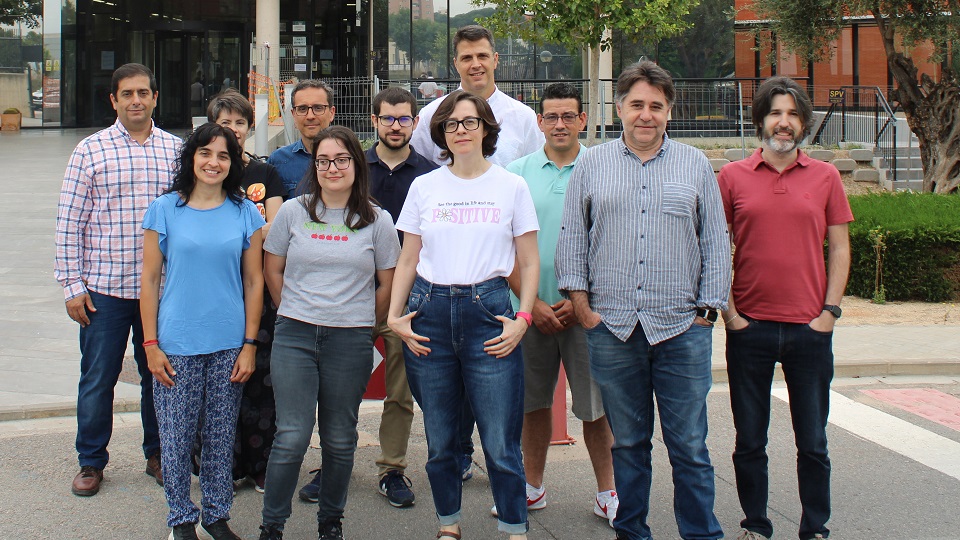
IRTIC (Institute of Robotics and Information and Communication Technologies) is a research center at the University of Valencia (UV), specialized in the development of innovative solutions in fields such as artificial intelligence, immersive environments, data interoperability, and real-time systems. Its multidisciplinary teams lead research, development, training, and technology transfer projects with applications in healthcare, transport, public administration, and digital transformation.
News
The UV Presents its Latest Technological Advances at VDS
On October 23 and 24, the University of Valencia (UV) and its Science Park showcased their most recent R&D&I advancements to the international scientific community during the Valencia Digital Summit, held at the City of Arts and Sciences. Over 12,000 attendees experienced first-hand the UV’s cutting-edge research offerings through an immersive and interactive exhibition.
This year, the UV made a standout appearance. Vice-Rector Ángeles Solanes highlighted that their participation included expanding their exhibition area to 50 square meters, hosting a workshop and a roundtable, and presenting fourteen innovative technology projects.
As the leading research institution in the Valencian Community, the UV presented projects spanning all fields of knowledge. Among the highlights, the mayor of Valencia, María José Catalá, tried the Formula 1 simulator, learned about the show’s top highlight—the intrauterine manipulator—and interacted with the UV’s virtual reality display screens.

FAQs
Got questions? We’ve got answers.
Browse our FAQs for clear and simple solutions.
What are data spaces?
Data spaces are secure and interoperable ecosystems where multiple organizations can share, access and use data under clearly defined rules.
They ensure data sovereignty, meaning each data owner maintains full control over how their data is accessed and used.
MIRACLE follows European reference architectures (DSSC Blueprint 1.0, IDS Data Space Protocol) to create a medical-surgery–oriented dataspace that supports privacy, trust, interoperability and value creation across hospitals, researchers and technology providers
What are use cases?
Use cases describe the real-world scenarios that the MIRACLE dataspace enables. They help define:
what data is needed,
who participates,
what services are provided (e.g., AI recognition, prediction, simulation),
how value is generated for clinicians and hospitals.
In MIRACLE, examples of use cases include:
real-time anatomical recognition during robotic surgery,
prediction of intraoperative complications,
AI-assisted training environments,
secure data sharing for clinical research.
Use cases serve as the foundation for designing the architecture, governance and services of the dataspace
What is a data space governance framework?
A governance framework defines the rules, responsibilities and procedures that guarantee the dataspace operates in a fair, secure and transparent way.
It includes:
terms of use for participants,
security, privacy and anonymization rules,
data access and usage policies,
decision-making procedures,
compliance with GDPR, EHDS and European data-space standards.
In MIRACLE, IRTIC acts as the governance authority, defining and enforcing the governance framework and ensuring alignment with the DSSC Blueprint and European regulations
Who can be a data product provider?
Any organization that contributes datasets to the dataspace can act as a data product provider. This includes hospitals with surgical recordings, research centers with curated datasets, academic institutions, or industry partners. Once ingested and anonymized, these datasets become reusable assets within the MIRACLE ecosystem, always under the conditions established by the provider
Who can be a service provider?
Service providers are organizations that build digital services on top of the dataspace. These may include AI developers, technology companies, research teams or clinical partners offering analytics, visualization tools, prediction models or simulation environments. Their services operate within the secure and interoperable technical framework defined by MIRACLE
Who can take part in the Miracle project?
MIRACLE is open to organizations involved in robotic or laparoscopic surgery, digital health, research or surgical training. Hospitals, universities, research institutes, robotic-surgery manufacturers, technology providers and regulatory bodies can participate as long as they adhere to the governance rules and contribute to the ecosystem, whether through data, technological services, expertise or clinical validation
Still have questions?
University Research Institute of Robotics and Information and Communication Technologies



Proyecto financiando por Secretaria de Estado de Digitalización e Inteligencia Artificial y la Unión Europea